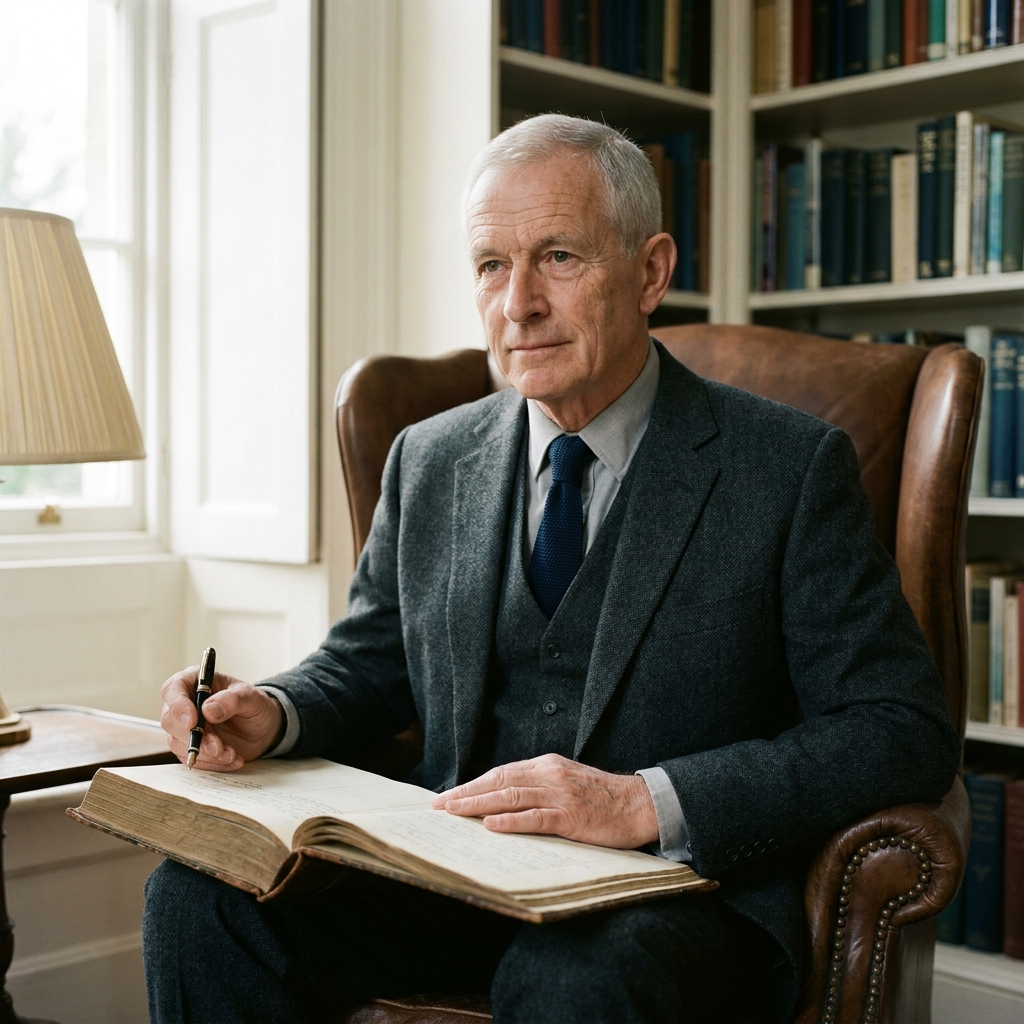
Richard Myrddin Vaughan Allen
Chair · trustee since 2010Retired solicitor of the Salisbury practice Wilsons. Worshipper at St Martin's. Reads the case files in a leather wing-back chair on a Tuesday evening.
[email protected]About the Charity · founded 1696
John Fricker died in 1696 and his will was proved on 16 April 1701. The trust he set in motion has been answering letters in Salisbury for three hundred and twenty-nine years. We are five trustees, one clerk, an endowment that returns about £21,000 a year, and several centuries of careful records in a fireproof cabinet on St Martin's Church Street.
John Fricker, of the parish of St Martin's, Salisbury, made his will in the year 1696 and died shortly afterwards. The will named small bequests to family and to neighbours, but the substantive part — the part that has outlived him by three and a quarter centuries — directed that the residue of his estate should be applied for the relief of need in the two adjoining parishes of St Martin's and St Edmund's, and that an annual payment should be made in perpetuity to Trinity Hospital, Salisbury, the almshouse founded on St Ann Street in 1379.
The will was proved on 16 April 1701 at the Prerogative Court of Canterbury. A copy of it sits today in the archives of the Wiltshire and Swindon History Centre at Chippenham, in the hand of an anonymous Salisbury clerk who used a goose-quill more skilled than ours.
The charity that bears his name has run on the same simple principle since: a small endowment, a board of trustees drawn from the two parishes, monthly meetings to read incoming applications, and a strict habit of making no public claim about the help we have given. The 2012 scheme of the Charity Commission tidied the procedural detail and confirmed the area of benefit; the substance is what John Fricker laid down in 1696.
We grant. We do not deliver services. We make six kinds of small payment — winter fuel grants, befriending costs, a quarterly stipend to Trinity Hospital, a contribution to the parish pantry at St Martin's, the running of a small wellbeing walk, and a discretionary fund for anything else that turns up on the Clerk's desk in a given month.
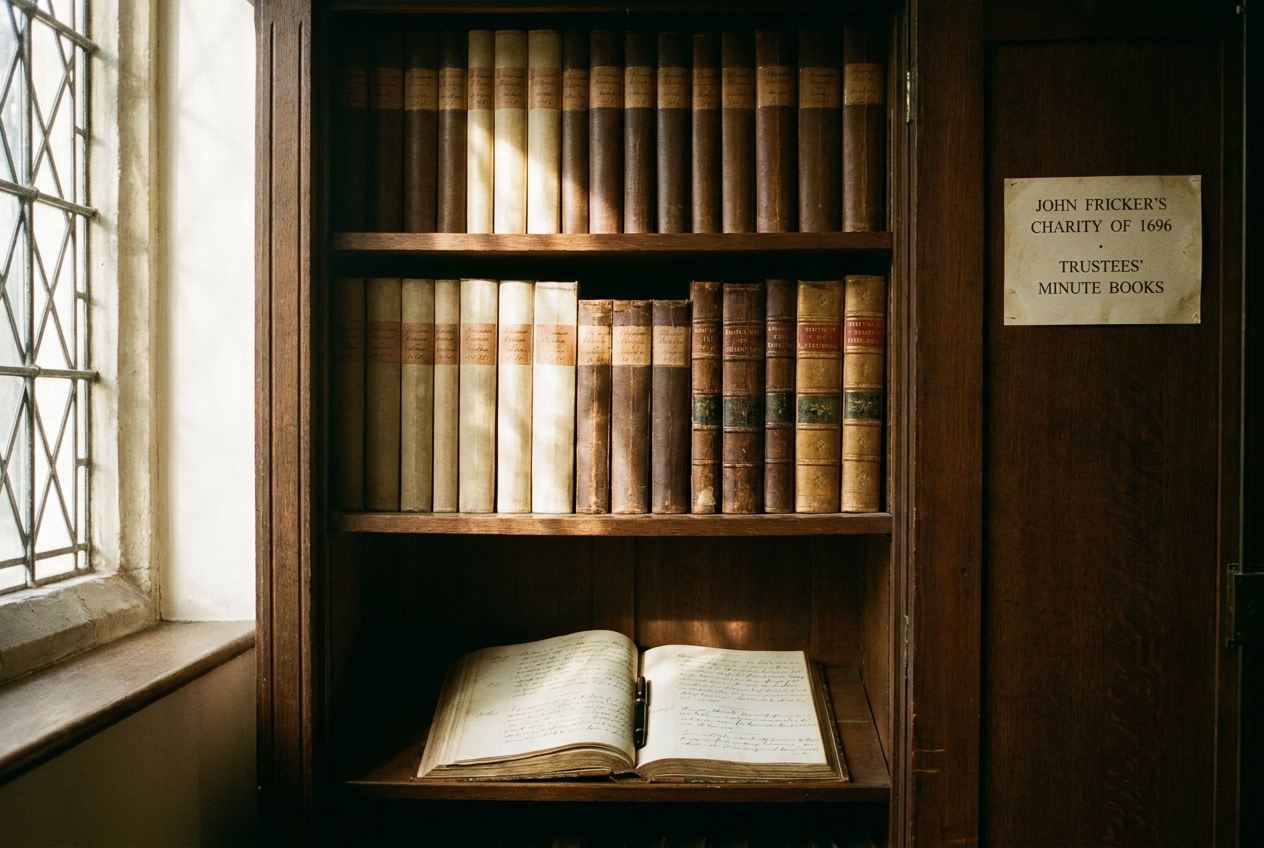
Every application is read by all five trustees before a payment is made. We meet on the second Wednesday of the month at St Martin's Church House. Decisions are recorded in a bound minute book that, in the Trustees' direct line, runs back to 1701. We sign each entry with a fountain pen because it is what we have always done.
The endowment was reinvested under the 2012 Scheme of the Charity Commission, and is now held by COIF Charities Investment Fund. The income from those investments — and a small flow of voluntary donations from people who have heard of us — funds everything we do. We do not run public fundraising appeals. We have run one annual Winter Fuel Appeal since 2018 and no other.
Our income for the year ending 30 September 2025 was £21,049. Our expenditure was £29,680. We drew the difference from accumulated reserves built up during the quieter years of 2020–22. We expect to be back in balance by 30 September 2026 without changes to grant policy.
We are governed under a Scheme of the Charity Commission dated 28 February 2012, which supersedes earlier orders made under the founding will of 1701. The Scheme requires not fewer than five and not more than seven trustees, drawn between the two parishes. Trustees serve a renewable term of four years and may stand for a maximum of three consecutive terms.
No trustee is paid. No trustee receives any benefit, in money or in kind, from the Charity. The Trustees' Clerk — a part-time, paid position equivalent to one day a week — is the only role for which any salary is drawn.
Our annual report and accounts are filed with the Charity Commission for England and Wales on or before the statutory deadline each year. The most recent filing, for the year ending 30 September 2025, is up to date. The Charity Commission record is at register-of-charities.charitycommission.gov.uk/charity-search/-/charity-details/220019.
We publish a brief annual review on this site each March. We do not produce a glossy. We do not produce a video. We do produce a four-page A5 letter, set in Caslon by a printer in Wilton, that we send to every named donor of the previous twelve months.
A timeline
He directs that the residue of his estate be applied to the relief of need in the parishes of St Martin's and St Edmund's, and to the upkeep of Trinity Hospital. He dies later the same year.
The trust is established. The first formal grant — recorded as 'three shillings to the widow Carpenter' — is paid out of the estate on 9 June.
Before this, grants were applied for in writing and discussed in open meeting. The new printed form survives in our archive and remains, in modified spirit, the document we use today.
Under the Charitable Trusts Acts, the trustees consolidate three smaller dependent funds. The annual stipend to Trinity Hospital is fixed at fifteen guineas, a sum that lasts until decimalisation.
The Charity pays the bulk of the costs as a one-off capital grant. Eileen, now ninety-one and a resident at Trinity, remembers the work being done. The slates above her head are ours.
The 28 February 2012 Scheme updates the governance to current standards. The substantive direction — relief of need in the two parishes, and Trinity Hospital — remains entirely intact.
For the first time in the Charity's recorded history we run a small, named public appeal. £4,200 is raised. The First Frost Fund is born.
213 households and Trinity Hospital are supported. Total expenditure: £29,680. We publish this site, the first the Charity has ever held.
Five trustees
Our trustees are listed publicly on the Charity Commission register. Each serves voluntarily, takes no payment of any kind, and reads every case before our monthly meeting. Brief biographies below are written by the trustees themselves.
Retired solicitor of the Salisbury practice Wilsons. Worshipper at St Martin's. Reads the case files in a leather wing-back chair on a Tuesday evening.
[email protected]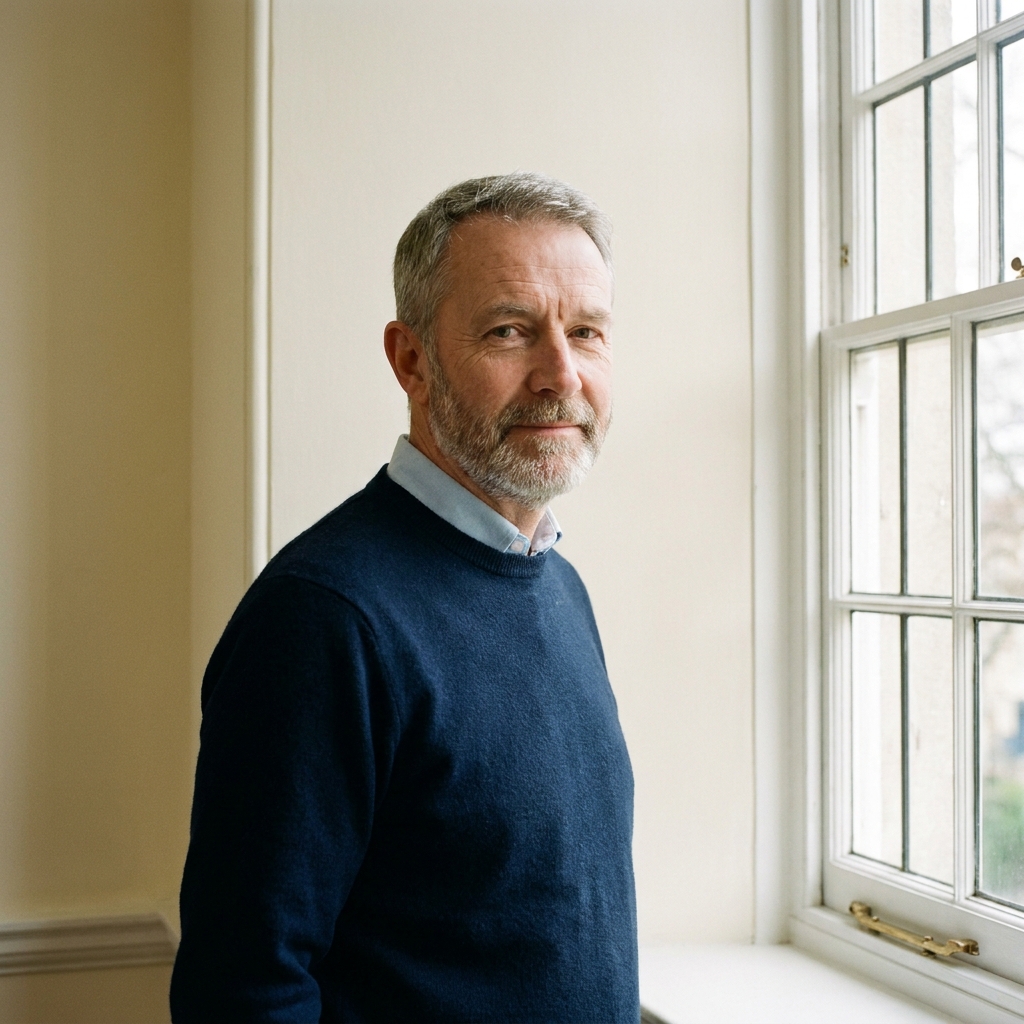
Former head of pastoral care at South Wilts Grammar. Chairs our safeguarding subgroup. Walks the Cathedral Close with Margaret on Sundays.
[email protected]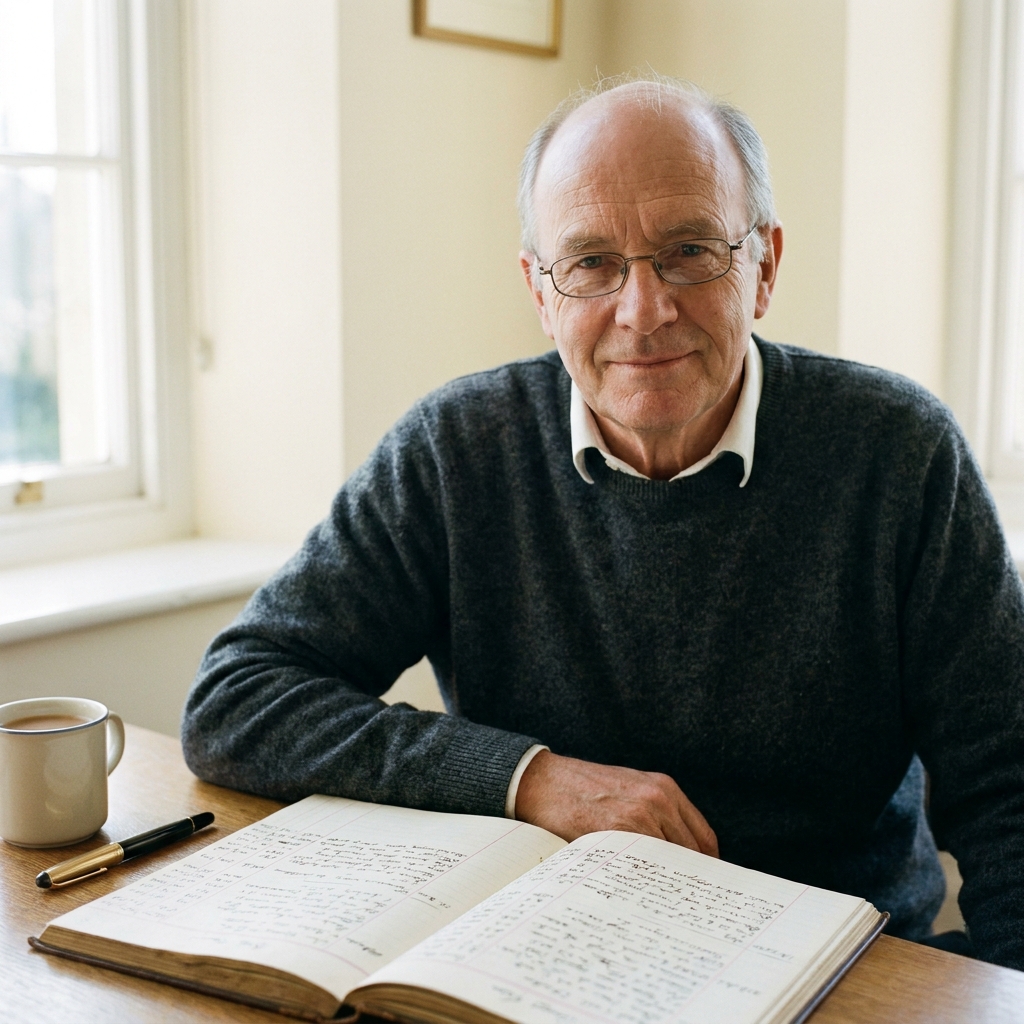
Retired chartered accountant. Holds the bank book. Has not lost a receipt in eleven years.
[email protected]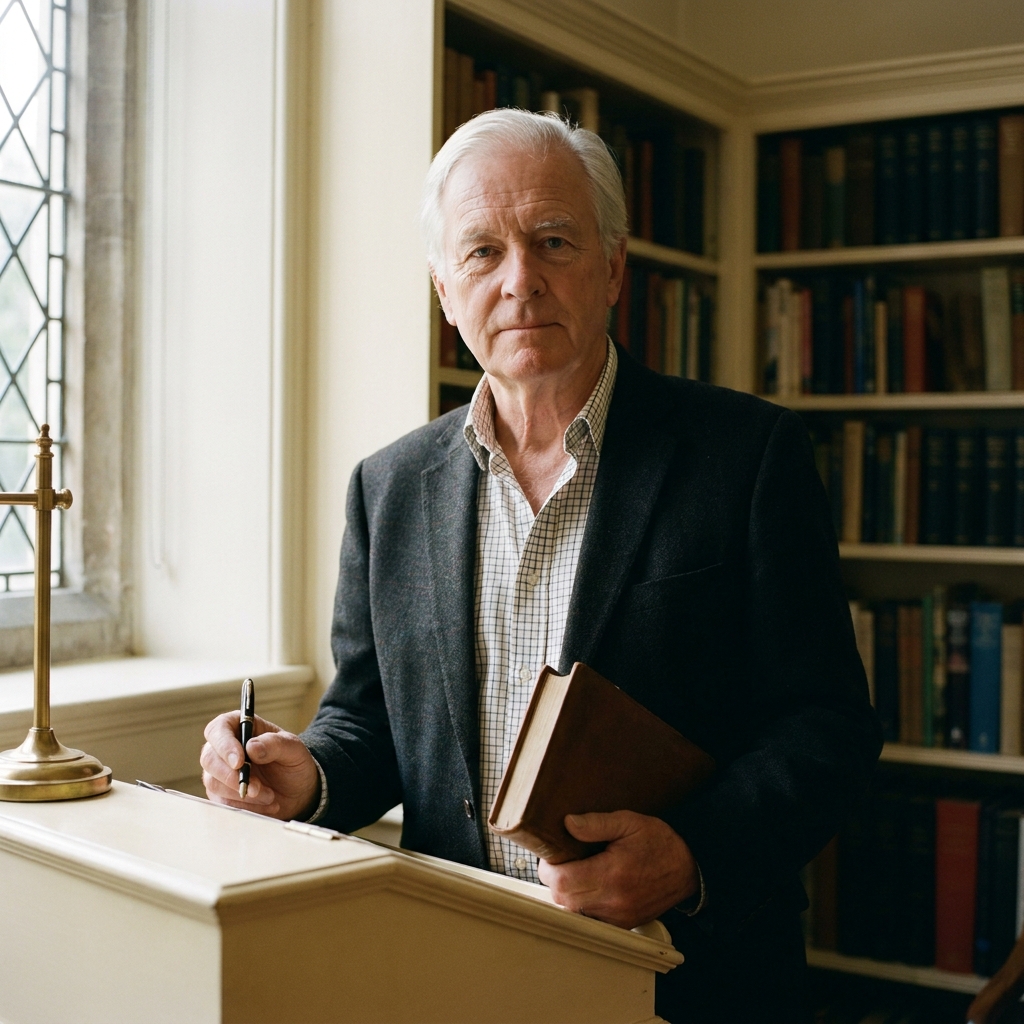
GP retired from a partnership on Endless Street. Writes the minutes. The bound minute book is now in its fourth volume in his hand.
[email protected]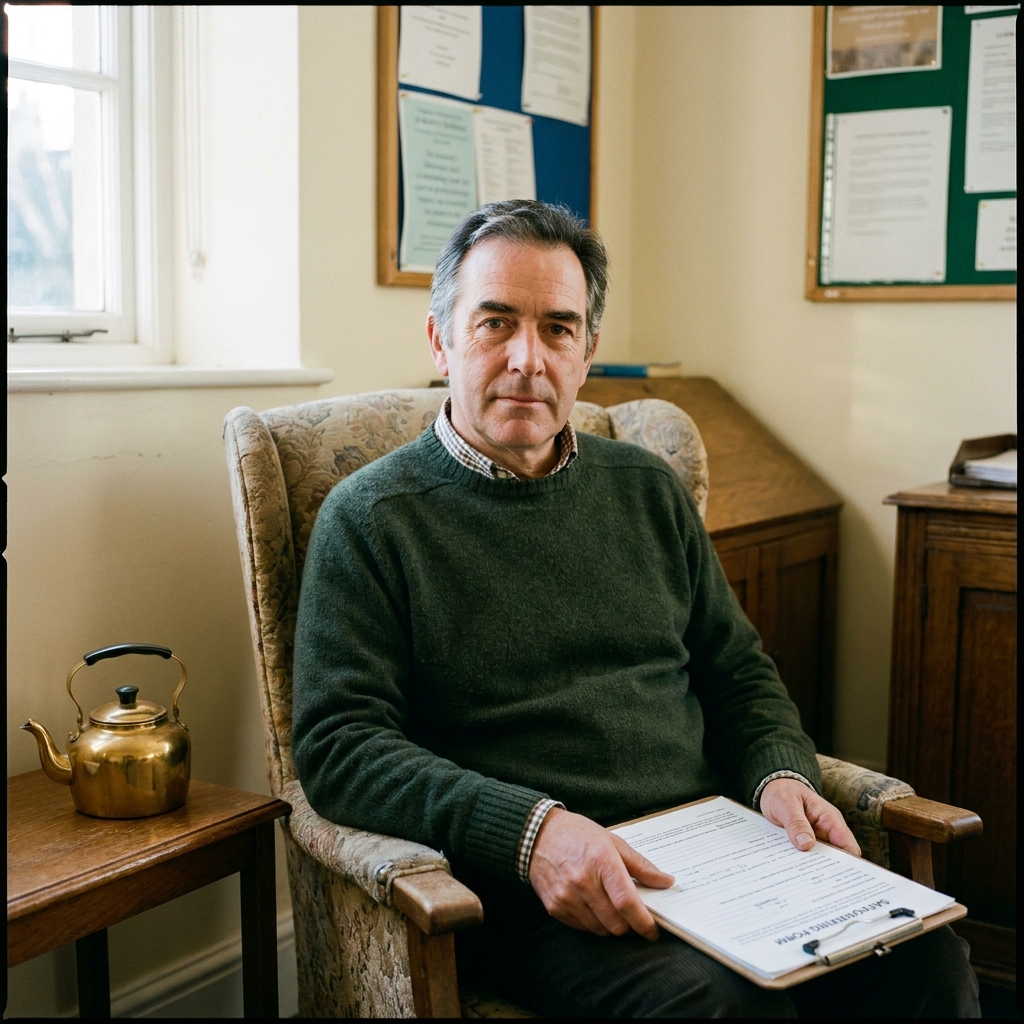
Career social worker with Wiltshire Council. Leads our safeguarding policy. Knows whose door to knock on when there is an emergency.
[email protected]A note on the trustees
The trustees' names and dates of appointment are taken directly from the public Charity Commission register. The brief biographies above are short character sketches written by the trustees themselves for this site; they are not statements of professional standing.
We answer every letter ourselves, within five working days, in the order it reaches us. We never publish a case. We never share a name.